Simple formats can travel
A focused menu can suit kiosks, food courts, small stores or standalone sites without reproducing unnecessary complexity.

Takeaway franchising South Africa
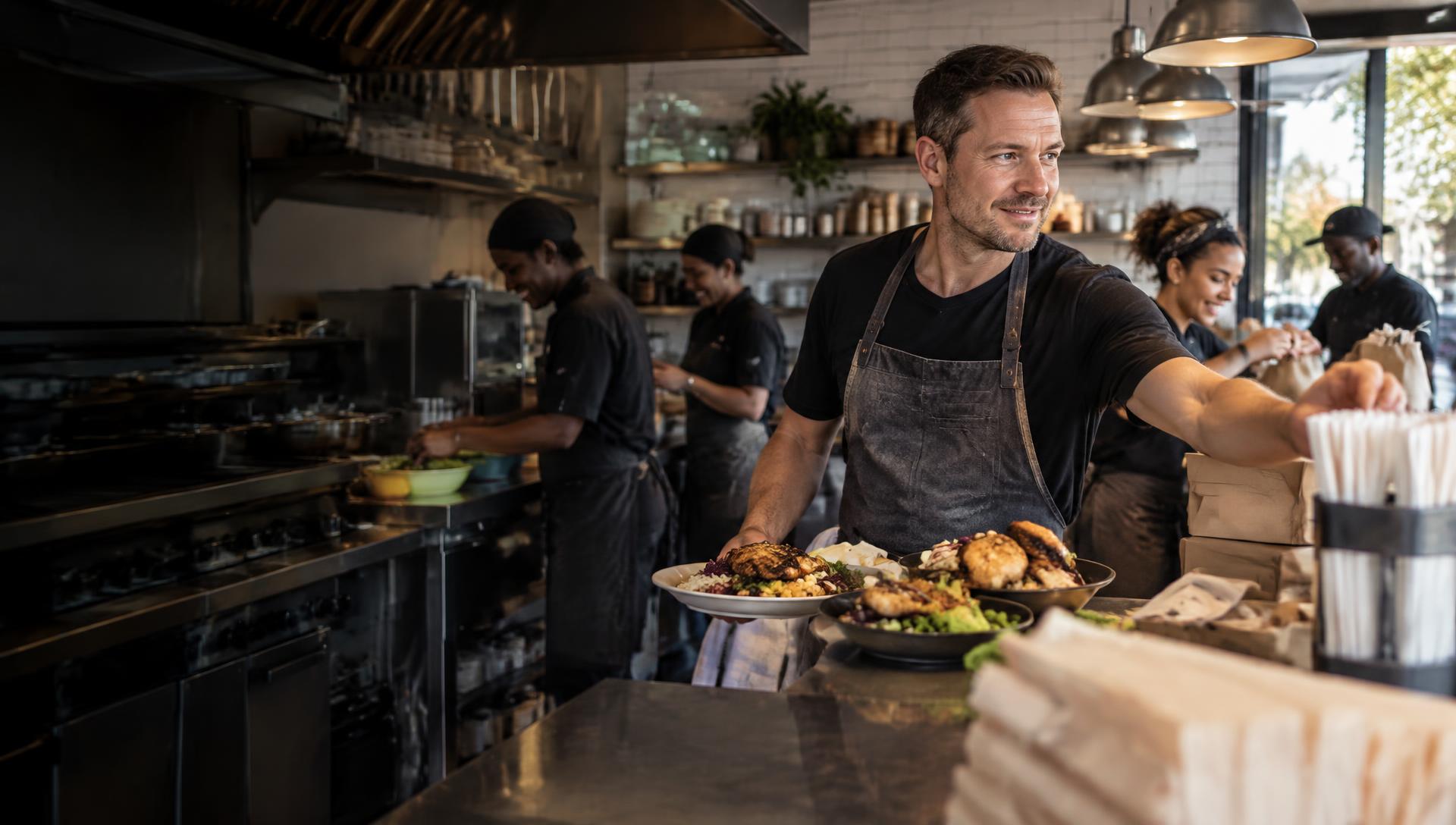
You have built a takeaway people return to, a menu with an identity and a service rhythm that works under pressure. Franchising could take that concept into new suburbs, food courts and towns — but only if food production, speed, margins and quality can travel without you standing at the pass.
Franchise Feasibility & Opportunity Report | R9,950
Direct answer
Yes. A takeaway business can potentially be franchised if the menu, food production, speed of service, food cost, staffing and customer experience can be reproduced consistently in other locations while leaving enough margin for the franchisee after rent, labour, food, delivery costs and franchise fees.
The commercial test is not whether the current store is busy. It is whether a trained operator can deliver the same product quickly, control waste and earn an acceptable return across more than one format or catchment.
From local operator
to network leader.
The founder's real question
Customers ask when you are opening closer to them. A landlord has offered another site, or a manager wants to run one. You can see a kiosk, food-court or small-store network, but every opening would otherwise need your capital and daily supervision.
In a franchise model, local owner-operators typically fund and run their outlets. Your role changes from solving every service problem to protecting recipes, unit economics, brand standards, supply and network performance.
Explore the wider benefits of franchisingWhy the model can travel
A focused menu can suit kiosks, food courts, small stores or standalone sites without reproducing unnecessary complexity.
Takeaway customers can buy repeatedly, giving local operators regular opportunities to build habit and loyalty.
A franchisee can bring daily commercial attention to speed, staffing, waste and local marketing.
A growing network can improve demand planning and supplier discussions where quality and availability remain consistent.
Packaging, counters, delivery orders and stores can make the brand recognisable across a local market.
Counter, collection and delivery can diversify demand when each channel remains profitable.
The hard truth
The biggest danger is confusing a queue, delivery volume or a popular menu item with a transferable franchise model.
Recipes, prep decisions or service recovery still depend on one person.
Platform sales grow revenue while commissions, promotions and packaging weaken contribution.
Too many items increase prep, stock, training, holding and wastage risk.
The current result may rely on exceptional local habits, footfall or rent.
Franchising magnifies what already exists. Strong economics and systems become more valuable; unresolved weaknesses become harder to hide.
Continue reading
Add your details to continue reading the Takeaway Franchising Guide. Access opens immediately and covers our full resource library in this browser.